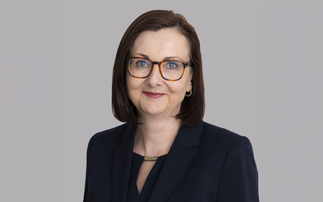


Global Pensions talks to David Morris of GWA about fundamental indexing
Global Pensions: Alternative indices have been garnering interest from institutions in Europe, North America and Asia. Why has this been the case?
David Morris: The need for scale curtails performance of even the best active managers and this has given passive market index tracking a role to play with much lower fees and a fully transparent, stable process.
However, market indexing has not provided the complete answer because it is susceptible to speculative waves. In each of the last three decades, great bubbles occurred in: Japan (1989), the Technology Bubble (1999), and Global Financials (2008/9 - the anti-bubble). When speculators focus upon a few ‘hot' stocks the relevant market index becomes very concentrated, destroying its diversification.
Furthermore, during periods of market decline, all securities tend to move down together, becoming more correlated. This also reduces diversification.
In my view, the interest in alternative indices comes from the desire to maintain adequate diversification in their core portfolios in order to lower risk.
Global Pensions: With so many different products emerging, what questions should an investor ask when trying to find the best strategy for their portfolio? What risks should they be aware of?
David Morris: Let me say at the outset that in my view alternative indices are not a substitute for the performance benchmark that is the market capitalisation index.
Some people think that the market capitalisation index is flawed and should be replaced with a new index. This makes little sense in my view because the market capitalisation index defines the opportunity set for all investors at any one point in time. It is the ultimate performance target to which we are accountable.