• Site search

Discussion . Fixed Income

Seeking alpha in a low yield world

Global Pensions | 28 Feb 2011 | 14:34

dc-feature

Global Pensions gathered industry experts to discuss the lessons learned from the sovereign debt crisis, and where to find returns in the fixed income market going forward

Attendees

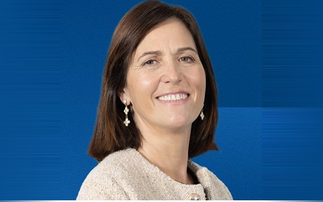
Raquel Pichardo-Allison, editor, Global Pensions

Bernard Abrahamsen, director of fixed income at M&G Investments and trustee of the M&G Group Pension Scheme

Eric Busay, portfolio manager, California Public Employees Retirement System
Lennox Hartman, head of fixed income, Aon Hewitt

Loic Cadiou, investment manager, H2O Asset Management

Mark Dowding, senior portfolio manager, BlueBay Asset Management


Raquel Pichardo-Allison: The sovereign debt crisis dominated the headlines in 2010. Do you think that the risks associated with sovereign debt are already priced into the market?

Lennox Hartman: At Aon Hewitt we think all the risks are not priced into sovereign markets, so we underweight government debt across the board. Two years ago, when credit spreads were really wide we advised clients to go out of government bonds into credit, and we certainly have not tempted them back into government bonds, particularly at these rates at the moment. So what we are looking at are further credit opportunities rather than rate opportunities in this environment. We think that the opportunity to add value in the sovereign bond market is best expressed in absolute return space, particularly against a liquid and volatile background.

Loic Cadiou:
The crisis and the re‑pricing of the sovereign debt risk moved along last year, so it has made good progress in some areas while there is still more progress to be made in others. We have a discretionary approach, looking for places where risk is well priced and identifying where it is still expensive. If we consider the European context in particular, there is a risk of contagion to places where spreads are still tight, while alternatively in other places where default is over-priced, you can look on the long side. The continuation of the crisis is probably calling for relative value positions rather than an outright short or underweight on European and Monetary Union (EMU) bonds. In that sense we do not see a full-fledged crisis, because the market is rarely surprised twice by the same event, although there remains countries where sovereign risk is still under-priced.

Raquel Pichardo-Allison: Eric, what kind of exposure did CalPERS have to European sovereign bonds?

Eric Busay: We ended up having international fixed income, which is managed by external managers. The exposure is less than 2% of the fund. The benchmark is a Barclays IFFI, an international fixed income benchmark in local currency, which includes Europe as a major constituent of the benchmark. That having been said, the individual managers end up having the ability to go to anyone in the eurozone that reach our parameters. It has to be above investment grade sovereign, so that eliminates some of the issues that are there. They can go into peripheral Europe but the exposure is very de minimis.

Raquel Pichardo-Allison: Do you know if your managers will be investing in the bonds issued by the European Financial Stability Facility?

Eric Busay: At this stage I believe that is not the case, but of course they could consider it.

Mark Dowding: The first thing I would offer as an observation is that we think the experience of the last couple of years is probably going to be the new norm going forwards, in the context of the sovereign space. We would actually cite the period in the eurozone between the inception of the eurozone up until 2008, where effectively all markets were trading as one, as the anomaly and the exception in the period, and I think we are going to see this pattern of volatility between sovereign markets continue into the foreseeable future.

The thing I feel very strongly about is that you are going to see volatility and you are going to see alpha opportunity linked to that volatility, particularly in an environment where interest rates are at a secularly low level. From a product standpoint our clients will be interested in managers who can deliver a meaningful alpha contribution versus benchmarks. Clearly, earning 2% above a benchmark when rates are at two or three is worth a lot more to you than when rates are at five or six. So, alpha becomes a very important component and we certainly believe that in the sovereign space, it really is about understanding that investing in government bonds requires explicit credit analysis expertise and specific sovereign credit expertise. In this space we should see more outsourcing of mandates moving away from passive benchmarks and away from index-tracking products into managers that can deliver strong returns against those sorts of benchmarks.

Eric Busay: That reflects some of the themes we have been looking at as well. Quite honestly we see it as being four levers that any government has at this point. Clearly they can potentially inflate their currency, they could increase taxation, they could default on their bonds, and that might mean a renegotiation or a selective default for various classes of bonds. The fourth lever is that they could renegotiate benefits, i.e. the social contract within the country. To the extent that any one of these four levers gets pulled or pushed, I think that you are going to end up seeing that it affects bond holders in different ways. In the eurozone the individual sovereigns cannot devalue the currency. To the point that was previously made, I think active management is definitely a preferred way to approach this situation.


  • Print
  • Comment

Categories: Fixed Income

Topics: Calpers, California public employees retirement system, Aon hewitt, Bluebay, H2o asset management, M&g investments

  • Comment
  • Print this page
  • Share

Recent comments

There are no comments submitted yet. Do you have an interesting opinion? Then be the first to post a comment.

Professional Pensions Jobs

deal maker content image

Professional Pensions Jobs

Professional Pensions jobs for all the industry’s latest vacancies. Visit now to find your perfect job.

Advertisement

Advertisement

Advertisement

Advertisement