

A trio of pension industry innovators have teamed up to formally launch a capital-backed arrangement (CBA) solution, Safe Covenant.
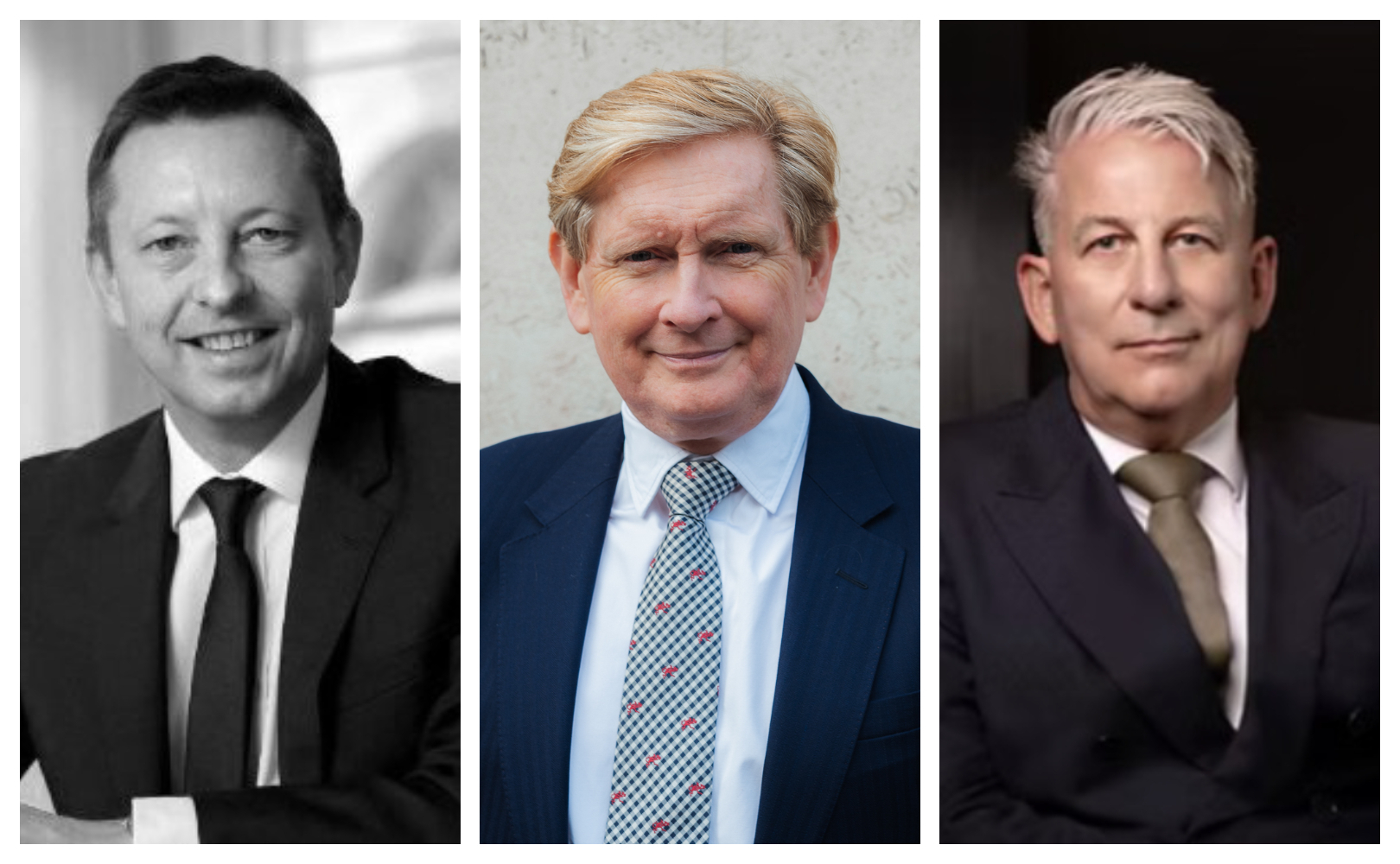
The CBA is being led by Mobius Life founder and former chief executive Adrian Swales, Goddard Perry Consulting and Salvus (now Cushon) Master Trust founder Steve Goddard, and Antony Barker, the former actuary and chief investment officer behind the launch of initiatives such as The Pensions Superfund and Goldbach Protected Lifetime Income.
Safe Covenant will join a handful of capital-backed arrangements already in the market, including Pension Safeguard Solution, a joint venture between Punter Southall and Carlyle and an Aspinall vehicle, Portunes Capital.
Swales said that, by introducing third-party capital alongside a scheme and sponsor, Safe Covenant would boost both covenant strength and funding level – allowing trustees to run-on and invest more flexibly from a stronger position.
He said Safe Covenant would benefit sponsors, by removing the economic risk and ongoing running costs of defined benefit (DB) schemes, remove the risk of a Pension Protection Fund qualifying insolvency event for trustees, and significantly increase the certainty of providing full benefits to members through whatever exit strategy they see fit.
Swales said Safe Covenant would allow schemes to adopt a "purposeful" run-on strategy with the added support maintaining the funding level in an overall surplus position – a move he said could enable the sponsor to benefit from future release of embedded surplus, support the future enhancement of members' benefits, fund defined contribution arrangements and stop pensions being a blocker to future corporate activity.
Under the arrangement, the trustees and their advisers stay in place, with full control of the scheme's endgame strategy. Likewise, there is no need to lock up scheme assets with an alternative investment manager.
Swales explained: "We are bringing third-party capital from recognised global asset managers and other investors alongside the existing assets of a pension scheme to provide extra immediate security and then to extend the timeframe over which trustees might want to be able to run on. The idea is to bring the scheme into an immediately better funded position, remove unproductive constraints on investment strategy and give trustees the ability to invest and manage the scheme over a longer timeframe."
How it works
Under the Safe Covenant CBA, buffer investments would be made by external capital provider into a Scottish Limited Partnership (SLP) or other remote vehicle set up for each individual pension scheme.
The scheme sponsor would also typically invest alongside the capital providers in the buffer fund – a move Safe Covenant said would result in an enhanced funding level position on day one, minimising downside risk.
Safe Covenant would not itself put capital into the SLP but would set up the CBA and provide ongoing investment governance and operational performance analytics via the structure. It would charge a fee for its work, rather than participating in any outperformance.
Swales explained: "We're bringing everyone together to create the best outcome for the trustees, sponsor and third-party capital provider, because if we don't get benefits for each of those, then the deal won't happen. Our role is, first of all, to set that up, and then secondly, it's the ongoing monitoring of that, adapting the structure as circumstances change – as they inevitably will."
The investment objectives of this buffer would be agreed at outset in a memorandum of understanding and complete control over the investment strategy is retained on the assets.
Details of how the funding buffer would be run are agreed at the onset of the arrangement via a memorandum of understanding, which would agree areas such as investment strategy and investment as well as exit terms and the settlements provided to the capital provider, trustees (on behalf of the members) and the scheme sponsor.
A range of capital providers
Swales said that Safe Covenant had assembled a broad panel of capital providers to reflect the different objectives of each scheme and sponsor, most notably the timeframe involved – whether they want to do a buyout in three to five years, for instance, or if they are happy to run-on for seven to ten.
Swales explained: "There are fundamental differences between pension schemes and their sponsors and future plans; different third-party capital providers will be more or less interested in different types of schemes."
He said private equity houses were much more likely to be interested in shorter-term investments, while family office and special situation assets managers tended to be longer-term investors.
Swales added: "It doesn't make sense to have just one capital provider… Different people on the capital provision side want to provide different things."
Safe Covenant said it now has around six capital providers of varying sizes and of varying types, some looking to provide equity investment, others looking for a debt-driven approach according to the circumstances of the scheme and sponsor.
Market engagement
The firm has been engaging consultants, legal advisers and professional trustees and is now actively working on three cases – each for schemes and sponsors with different objectives.
These include one sponsor that is considering a CBA to help it recover assets currently held in an escrow arrangement as well as to minimise the risk of deficits emerging in the future.
Another sponsor is looking to use a CBA to minimize its contributions to the scheme – looking to reach a 100% low dependency position within ten years and a full risk transfer position within 15 years.
The third has an overseas-owned shareholder looking to exit the sponsor company but sees the pension scheme exposure as a drag on valuation even though in accounting surplus. Unfortunately, the widening timeframe from buy-in to buyout coupled with the cost and loss of control in the interim, means an insurance risk transfer is not an option.
The three active cases include varying levels of contributions from sponsors and both debt and capital providers.
Swales said there was a significant opportunity for alternatives such as Safe Covenant – noting that, while funding had improved significantly over recent years, 4,000 of the remaining 5,000 DB plans – schemes with some £660bn of liabilities – would not be able to afford to buyout their liabilities with an insurance company today.
He said even those that could afford buyout may not be ready to or wish to - or may not be "transaction ready" due to residual private market holdings.
Swales hoped Safe Covenant would be able to win around a dozen clients over the next three years.
He concluded: "Out of the 1,000s of schemes out there, we think we can bring the right solution to two or three to start with. And once it becomes more understood and people are more used to it, then I think there could be a significant number come through."


