


Top row from left: PIC co-head of transition management Paul Barrett; Capital Cranfield professional trustee Lisa Purdy; HS Trustees managing director Bobby Riddaway; PIC co-head of origination Tristan Walker-Buckton; IGG trustee director Tim Giles; BESTrustees president Alan Pickering; Eversheds Sutherland partner and head of pensions Mark Latimour; and Professional Pensions editor Jonathan Stapleton. Bottom row from left: Zedra client director Alan Greenlees; PIC senior origination actuary Louise Nash; Law Debenture trustee director Natalie Winterfrost; and Dalriada Trustees trustee Tiziana Perrella.
At the end of November, Professional Pensions assembled a panel of experts to look at how schemes should be approaching bulk annuity processes in 2026.
The roundtable – chaired by PP editor Jonathan Stapleton and held in association with Pension Insurance Corporation – took a look at emerging trends in the pension risk transfer market and looked ahead to anticipated trends in 2026, focussing on what strategies will get the best outcomes.
The discussion examined how schemes can best position themselves to secure optimal outcomes for both members and sponsors, including the importance of preparation, advisers, and overall approach - focussing particularly on market dynamics, innovation, pricing outlooks and regulatory developments.
Participants also shared their perspectives on the market over the coming 12 months – discussing views on insurer appetite, transaction timing, and how schemes of different sizes can tailor their approach to fit their circumstances.
What do you see as the key trends in the bulk annuity market at the moment from your perspective?
Tristan Walker-Buckton (PIC): There has been a significant shift in the bulk annuity market over the past year or so, whereby there is much more focus by trustees on the member experience and customer service overall. This is because improved funding positions now mean that trustees are less reliant on support from their sponsors, so have more freedom to focus on what might previously have been seen as softer issues. Our focus on this area over many years, including with the Institute of Customer Service, has helped us win several transactions, not least the Rolls-Royce buy-in. We definitely expect to see this trend continue this year.
In terms of overall market sentiment, expectations are for the market overall to be just over £40bn in 2025, which is partly a function of higher gilt yields, and partly a function of a couple of big transactions happening in 2026 instead. As a result, we expect the market to be significantly bigger – perhaps up to £60bn, a 50% jump on last year.
Louise Nash (PIC): It has been an interesting year in the market. Aside from the themes that Tristan has mentioned, what has been new is that we have seen a bit of an influx of investors into this market, providing increased capacity and capital.
We have our own acquisition by Athora going through the regulatory approval process. We have seen Brookfield entering the market with its own insurer and then rapidly pivoting to buying Just. We have seen Legal & General's partnership on a smaller scale with an American investment house. It shows the potential for our industry to meet the growing needs of the trustees of DB schemes, including at the very large end of the market.
If you had been having this conversation two years ago, you would have been talking about pricing being linked to credit spreads. But, despite what has been happening to credit spreads over the last year or so, insurer pricing has not become more expensive, as you would expect. That is a lot to do with the amount of investment in the market, the amount of competition between insurers for business in this space, and therefore the value that trustees get when they insure their member benefits through a buy-in or a buyout.

What has your recent experience been in the bulk annuity market? What are your views on the consolidation and new entrants in this space?
Alan Greenlees (Zedra): Starting on the part about new entrants, this is an interesting dynamic for smaller schemes in particular. If you look back maybe 12 months or so ago, there would have been an option of just one for some of these smaller schemes – almost a ‘take it or leave it' price. We are now seeing two, three or sometimes four insurers taking part in these processes and pricing is really competitive. From a trustee point of view, it means there is now a bit more of a focus shift. It is less about affordability or ‘can we do it?' and more about, what is the right option for our members? That goes back to the member focus point.
I would also like to touch very quickly on administration - that is a challenge we are seeing at the moment for a number of our schemes, both pre‑transaction and in some of the post‑transaction parts as well. Administrators dealing with the pre-transaction phase are already busy doing data cleanse as well as dealing with increasing member requests, dashboards and GMP. As such, we are seeing a bit more delay in when schemes come to market. We are also seeing some delays come through in terms of the post‑transaction piece as well – and it is generally taking longer to work through queries.
Tiziana Perrella (Dalriada Trustees): I agree, there is a very strong appetite. I, for one, have not noticed or seen with my clients a change in direction and buyout remains the endgame for the majority of schemes. There are only a very small number that pause or decide to go for run‑on. Some may decide to delay slightly to try and get a better match, for example, if they have underpins or if there are member options that are embedded.
On that note, there is also a bit more of an intention to try and preserve member options for the future, rather than accepting certain features will be lost on buyout.
In terms of challenges, there is very much a challenge with any sort of rectification that has been identified. You enter a queue – and it is not just GMP equalisation but anything else that you need to do on the administration.
There is also a concern, both from trustees and particularly from sponsors, about visibility. If there is any surplus that is coming back their way, they do not have visibility of when they are going to get that money. They go into a buy‑in and then the buyout wind‑up is at some point in the future, but when that point in the future will be is not very clear.
But even with the challenges, the direction is very much towards buyout.

Tim, do you see the direction as very much towards buyout?
Tim Giles (IGG): I sort of agree, but not really. A large number of schemes are now very well‑funded against solvency – depending on how you measure it, a third or more are sitting in a very comfortable position relative to solvency. That has given a lot of them the room to pause and take more time to think about the decision.
Ultimately, most schemes, but not all, will do run‑on into insurance, if not go to insurance immediately. But the market for us is polarised. If we look across our client base of 500 schemes, the smaller schemes are heading directly to insurance as and when they can. The larger schemes may have a very structured run‑on process. In between, a lot of them are managing the journey towards annuity purchase. They are often doing that in a measured way that might mean it is not immediate. They might run down a surplus. They might work through different things or go through various activities. We are seeing a lot of schemes seeing insurance five, ten or 15 years into the distance.
Lisa Purdy (Capital Cranfield): I would agree with Tim and the schemes that we are seeing there.
I want to go back to what Alan said about the length of time between buy‑in and buyout and that being an important part of the decision. When you are in surplus, price becomes less of a factor. Member experience and time in the post‑transfer period become more important. I know some deals have a very quick turnaround, but, with some insurers, schemes might be in the process for three or four years. That is not good. That means the costs are continuing in the scheme. The employers really do not want that. That is going to be a key challenge and we all know that the administrators do have these capacity constraints.
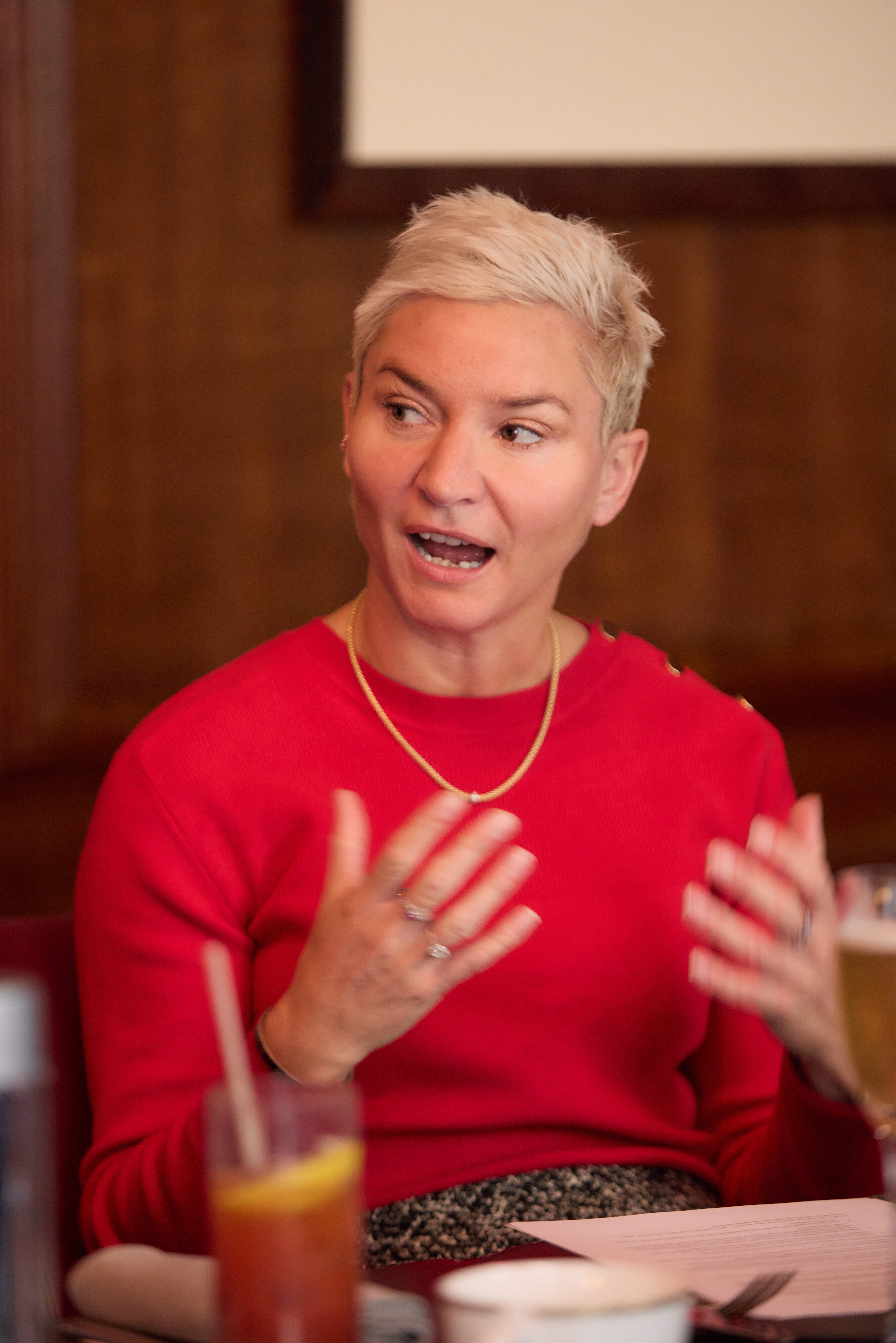
What has your recent experience with the market been?
Mark Latimour (Eversheds Sutherland): There is increasing competition, particularly at the lower end of the market, where you are seeing bigger insurers moving in to pricing at that end and new entrants coming into the market. The smaller scheme market is also being driven to an extent by the standardisation of the terms available in that part of the market.
I don't think we have really seen that sort of standardisation at the big end of the market, though, and the multi‑billion‑plus transactions tend to still be quite bespoke.
Natalie Winterfrost (Law Debenture): I was involved in a deal in June. It was not a big one, only around £300m, but it was a very competitive process, with seven firms involved, none of whom wanted to be stepped down. We ended up with four in the final stage. We did get all sorts of specific terms, including a price lock, commitments that they would keep our pension increase exchange (PIE) option going, and a promise that they would give us a residual risks quote. There was quite a lot of flexibility.
Mark Latimour: I agree. What I am tending to see on these deals is insurers willing to offer more flexibility in the options and features that they will put around it, but less flexibility in the contractual terms themselves. If you go back four or five years, there was a lot more negotiation around the actual contractual terms of the deals as well.
Tim Giles: Going back to the administration point, that pace from buy‑in to buyout is important. We work with clients who move towards this position of being able to get insurance and then find there is this potentially long window between actually doing the financial transaction and finally getting to where they need to be – corporates often sit there befuddled as to why that is the case.
More broadly, there is a drive from corporates to clean up their balance sheets for various reasons and get this finally done.
Alan Greenlees: Yes, it is about tidying up the balance sheet, but, in terms of surplus, they want access quickly.
Bobby Riddaway (HS Trustees): I want to talk about a slightly different dynamic. I deal with really small schemes and, when it comes to these sort of schemes, many are stuck. A lot have been let down by their previously fully-insured arrangements and many have nowhere to go. I am taking on one soon, which has just nine members, but it is going to be a real struggle. We are going to struggle to find somebody to quote to get it off the books. Anything in the market that helps solve this issue would be positive.
Alan Pickering (BESTrustees): Normal people just cannot get their minds around why it takes us so long to deliver what they think is a big decision. Having made that decision, they say, ‘Why can you not just sort it?' I am just a bit worried that the extra options that are now being touted by government are going to make it even more difficult for people to make decisions and implement.
I hope that people do not create a new industry in advising schemes on all the available options. For most schemes, I think it is a case of when to transfer to the bulk purchase annuity market rather than whether. We could waste an awful lot of time educating people on the merits of run‑on, and charge an awful lot of money, when I do not think that run‑on for the long term is appropriate for anyone other than the few – I do not know that many widget manufacturers want to regard their pension scheme as a source of profit, they really do want to move it on.
When it comes to administration, we need to maintain pace and keep our eye on the admin ball both before, during and after transition. One thing that has really improved matters recently is that people are now thinking much more carefully about who is going to do the heavy lifting, who is going to do the data stuff and who is going to make sure that BAU admin does not suffer because of project admin. Trustees now have a lot more choice as to whether their incumbent administrator helps them, whether they outsource it to a specialist or whether they go to the ultimate recipient, whether that is a consolidator or an insurer and say, ‘Here it is, as it is. Sort it for me so that I can get the best price and best ongoing admin'.

How are insurers managing the current level of transaction activity from an operational point of view?
Paul Barrett (PIC): When I first joined PIC 14 years ago, the flow of business was a few schemes here and a few schemes there. We have now got to the point where, in terms of schemes going to buyout, we have two or three schemes a month for which we are issuing individual policies. This is for the next two years and it will continue in that vein. We now have a full programme of schemes going through the process and we have to continue to get more efficient at it.
At PIC, the transition team manages the whole process. At the outset we had three people on the team, now we have approaching 20. All of our key suppliers have beefed up their numbers as well to meet the demand, for instance our administrators and cashflow providers. We have done everything we can to make sure that we are there, resource‑wise.
One problem we find is that the third-party administrators (TPAs) we have mentioned, as well as the in‑house administrators, do not necessarily have that resource and that is where we start having some of the problems around getting good quality data and taking longer to do things.
What we are trying to do – and what insurers have tried to do generally – is help people through the journey. To take an example, the implementation of GMP equalisation is probably the major blocker to schemes moving quickly to buyout and TPAs are just not geared up to do this efficiently from an insurer point of view.
We have spent a lot of time sitting down in rooms with these people saying, ‘How can we help you?' One of the things that we do is we educate them on the data that we need as an insurer rather than saying, ‘Go and do it, and come back when you have done it'. We do not think that is the right thing to do. We are trying our best in terms of the education piece.
We are also looking at areas like data standardisation as well. A bugbear of mine is that the data comes in all sorts of formats and we are looking at what we can do so that the flow becomes easier.
Data is also an issue more broadly too. We very rarely see schemes coming to market where GMP equalisation has already been done and all the cleansing has been done. It is starting to happen, but not in great numbers, and there is often a lot of work to be done – 18 months to two years is not unusual for cleansing and I have a lot of sympathy for TPAs and in‑house administrators who are having to do all of that that outside their day job.
But if you leave people to do it and say, ‘Come back in 18 months or two years when you think you have done the data', you are setting yourself up to fail. You have to get your hands dirty. That is the approach that we tend to take.

What do you see as a realistic timescale for schemes moving from buy‑in to buyout?
Paul Barrett: It is a really difficult question for the reasons we have already discussed. Typically, you are seeing data clearance periods in contracts for 18 months or two years. That is probably normal, depending on the quality of data and the type of transaction. From what I see personally, two years to two and a half years seems to be pretty much where we are. Some are quicker because the data is better. Some can be longer.
Louise Nash: We talk a lot about the length of time this takes, but fast is not the gold standard. The gold standard is managing the administration efficiently but well and making sure member benefits are paid correctly and cases are processed in a timely fashion during this period. If you get it wrong, that is the members' first experience with that insurer, it is the experience that will set up the relationship between the member and insurer for life.
Mark Latimour: You could make an argument that talking about the period between buy‑in and buyout is a little bit of a fiction in the sense that what you are really talking about is the period from when you decide to undertake a transaction to the buyout. One of the schemes that I am looking at currently is doing all the work pre‑buy‑in so at the point of signing and entering into the buy‑in, there will be a three‑month period to buyout. I have done one where it was an instantaneous buy‑in to buyout. You are just shifting the period around.
Natalie Winterfrost: You can do preparation before you are quite at the right solvency level. I have one where that is definitely the plan. We are going to do a buyout, so I am getting all my specs done now even though I do not think I can transact quite yet. That will mean it is a much quicker process when it comes.
Mark Latimour: I agree. The period between buy‑in and buyout is just one factor, and it can flex depending on what you do either side of that transaction.
Alan Greenlees: I think the key point to take away is about managing the expectations of both fellow trustees, members and in particular the sponsor. This goes back to the point made earlier. This is a long project and is likely to be years rather than weeks or months. Sometimes there is an unrealistic expectation from the company that, once they hit that magical affordability point, they can pick up the phone and get a deal done tomorrow.
What do you see as the options for schemes in surplus?
Tristan Walker‑Buckton: As I said, most of those discussions are at the trustee and sponsor end. But we have had a few processes where those discussions have not been resolved – you put your quote in, the quote says the surplus is bigger than people were expecting, and then there is radio silence while the trustees and sponsors are discussing about what to do with the extra surplus.
We are having to do quite a lot of work with our finance teams to create more flexibility about surplus. We are now seeing transactions where we know that there is a surplus and we are being asked to insure the benefits and give very flexible terms with regards to the surplus.
I think insurers are getting there. If there is more flexibility in the initial insurance contract, we leave the trustees to decide on this. We can obviously say, ‘We can insure whatever form you want. If you want to give uplifts in the form of increases or discretionary increases and new tranches, we can look at that'.
Louise Nash: Yes, from seeing a lot of cases where there has been a surplus to distribute, what has struck us is that there is no single way that trustees are distributing surplus. It is not uniform among schemes; it is not uniform among trustees. No one has yet coalesced on what the right way to allocate these assets fairly is.
Alan Pickering: This is an important issue. If you are going to have value sharing, it really has to be formulaic. I would hate to have any more strikes over, ‘Whose surplus is it anyway?' or have a company being taken over just to extract the surplus and dump the business. Value sharing is going to be part of the discussion, but the more formulaic you can make it the better.
Bobby Riddaway: There is an assumption by finance directors that the surplus just comes straight back to the company. I wonder how many finance directors, who are not pension experts, have actually had any discussion or had anyone say to them, ‘That surplus might not be all yours'. That is where the problem has come in.
Mark Latimour: There is no one scheme. There is no one benefit design. There is no one solution for surplus. For want of a better term, it is pretty much the luck of the draw in terms of how the scheme was drafted as to the position on surplus that you are facing at any given point.

How should schemes be approaching bulk annuity processes in 2026 and beyond?
Louise Nash: We can probably expect to see a broadly similar year in 2026. It is already looking very similar in terms of what is approaching the market across the size range. It feels like we have settled into more a business‑as‑usual at these volumes. For us, the most successful processes are those where we have a very clear ask from the trustee board on their requirements and objectives for a transaction. They might have very particular, difficult requests but, if they are very clear with us as to what those are, and why they have focused on those as what they want, you will often find an insurer very willing to try to address those particular solutions.
Where we get a big shopping list of 100 things, where it is not very clear to us why you want it or if it is really important, you often will not get quite as much engagement from the market, nor the participation or the focus on the particular factors important to you. That would be my top message for next year: know what you want and be clear about why.
Tristan Walker‑Buckton: Next year, certainly in terms of numbers, we are looking at pretty much the same pipeline as we were this year, though there are one or two large deals that did not happen this year and have moved into next year. That is all for the first half of the year –February until May‑time is going to be very busy for insurance. I would not necessarily be putting new transactions into the market around that point!
Louise Nash: Throughout this year, schemes have had good outcomes in various different ways. I should not really be saying that I hope for hard problems next year, but this year we have had some really good challenges from trustees about what they want to achieve in terms of replicating something they have done for members or something they have invested a lot of time in. I am really hoping we see similar challenges from you all this year, in terms of what you are looking to achieve in terms of transactions and continuing to push what we do as insurers. Getting messages from you about what is important and what you see as the gold standard does change the way we invest and the way we focus on what we offer.
Natalie Winterfrost: The timing of bringing a deal to market is something that is being discussed by my boards. When in the year? That could be the half‑year point, the end of year point. Particularly, for schemes that have already done transactions and know that, ultimately, they will buyout, they could do another transaction now or they could invest those assets. If there is particularly sharp pricing, does it make sense to just take advantage of that and do another slice?
Louise Nash: Pricing has been incredibly competitive in the last month or two, particularly at the smaller end of the market, with a few insurers behind where they expected to be at the start of the year. There are often opportunities in the market to achieve attractive deals.
Tristan Walker‑Buckton: As you said, price levels are great. But they are not representing where credit spreads are currently. If spreads start to widen, it is not going to immediately transform pricing.
Natalie Winterfrost: If they do not and they start to look persistent, then pricing is going to have to move.
Tristan Walker‑Buckton: You are absolutely right. Various insurers will have their appetites and how long they are willing to take that view for. The longer that spreads stay low, the less likely that insurers can continue to hold that price. I am not at all saying, ‘Buy now', or anything like that, but I do not see any signals that pricing is going to get better.
Alan Pickering: From a trustee perspective, price should never have been everything and it is not everything now. I would encourage you not to take your eye off the member experience. That is really important. From a public perspective, if we want to treat people well, from a trustee perspective, we want to know that you are going to care for our members in the same way that we would care for them.
Do you expect to see trustees and schemes continuing to look for non‑price factors going into 2026?
Louise Nash: Yes. It is very clear from around the table that that non-price factors are very high on everyone's agenda, as it should be, in a world where we are talking about surplus. The market has moved on from affordability.
Natalie Winterfrost: But if you have to go to the sponsor for some extra money to get the deal done, then you do not really have so much choice. You have to pick the cheapest, if you are willing to go with them, and ask the sponsor for less money. As you say, with a surplus, you can choose the member experience.
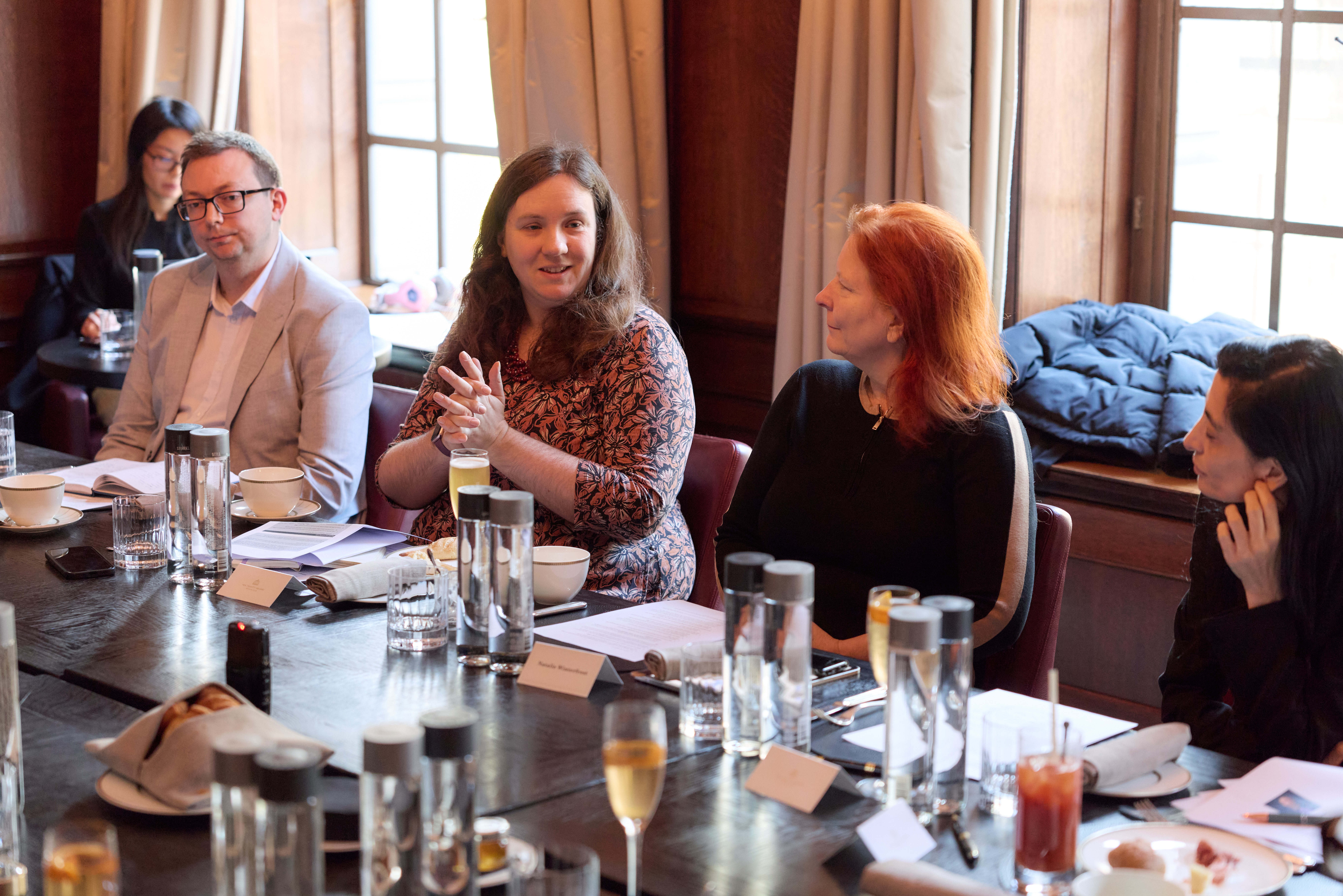
What are your key takeaways or concluding thoughts following this discussion?
Mark Latimour: I would say, from the trustee side, have a plan and execute it. Understand what you want and the steps along the way, whether that is pre‑data cleansing or all the other options you want. Understand what you want so that, when you go to transact, all you are doing is documenting the transaction. You are not going through all of the options and thinking of them at the time.
Lisa Purdy: Non‑price factors are become increasingly important as we move forward and I am really looking forward to the innovation that is going to happen, particularly when it comes to things such as member portals and member experience.
Paul Barrett: For me, it is about being realistic about timescales within the confines of what we currently have. We can all try to improve those, but we also need to be realistic and understand that things are not going to happen overnight. I think there is an education piece missing where the expectations of key stakeholders on the project can be very different to reality especially at the outset.
Bobby Riddaway: I would like to pick up the baton for tiny schemes. While taking on a single one member scheme is quite risky, if you take on 100 schemes with 10 or 15 members each, then you are getting quite a portfolio. Nobody is really addressing that yet.
Alan Greenlees: For me, it is about going into these projects with your eyes open and having realistic expectations of how long things will take and the amount of work that is needed. We also need to manage expectations for members and for sponsors as well.
Louise Nash: I find the most successful outcomes in this market are where it feels like the insurance market and the trustee market are working in partnership. We are both being very clear about what we are trying to achieve, what we can do currently, or how we can innovate to meet customer demand. . By keeping this dialogue open about what is needed in this market, we can hopefully come up with something that works well for all parties.
Natalie Winterfrost: I would absolutely support the emphasis on planning and the setting of objectives. You need to ask what are the important things you are trying to achieve when you go into the deal?
Tiziana Perrella: As trustees, we appreciate that there are challenges, but these challenges are known and understood. As professional trustees we are in a good place to help trustee boards to meet those challenges head‑on for the benefit of our membership.
Tim Giles: This is a key part of the journey. It is then about deciding where you are going to make that final, key part of the journey, preparing before you get there and for all the things that are afterwards. A better understanding of that longer process is what is going to make this easier, for us as an industry, for members and for boards.
Alan Pickering: I have two points. One is to improve the status and self‑esteem of pension administrators. They are the unsung heroes of this industry. Secondly, the trustee and the sponsor must move in lockstep along this endgame journey from beginning to end. We have a particular responsibility to acknowledge that, while this is our day job, it is peripheral for the plan sponsor and we all have to make sure that the sponsor is fully aware of what might be going on.
Tristan Walker‑Buckton: Continue to challenge us, particularly on things like member outcomes and member experience, areas that are now becoming increasingly important for trustees.
This increased focus has triggered us to do a lot of work internally, and make a huge amount of investment, to make sure we can continue meet trustee expectations. And we want to continue to exchange ideas with trustees and genuinely see what we can do better – we may already be doing a lot, but there is no monopoly on good ideas and we are keen to learn. Keep those challenges coming!
This roundtable was held on 20 November 2025 in association with Pension Insurance Corporation
Share
Related Topics
-
Risk Reduction

-
Pension Insurance Corporation
-
pic
-
Paul Barrett
-
Capital Cranfield
-
Lisa Purdy
-
HS Trustees
-
Bobby Riddaway
-
Tristan Walker-Buckton
-
Independent Governance Group
-
IGG
-
Tim Giles
-
BESTrustees
-
Alan Pickering
-
Eversheds Sutherland
-
Mark Latimour
-
Zedra
-
Alan Greenlees
-
Louise Nash
-
Law Debenture
-
Natalie WinterFrost
-
Dalriada Trustees
-
Tiziana Perrella


