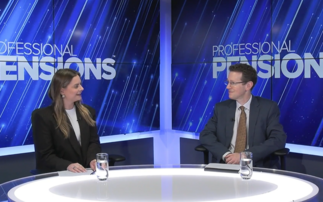

ESOG - A growing body of evidence

PSGS’ Simon Lewis breaks down the new governing body requirements

clock • 4 min read
Punter Southall Governance Services client director Simon Lewis
Image:

Punter Southall Governance Services client director Simon Lewis

The ‘governing body’ is a new term introduced by the single code to add to an already broad landscape of roles and responsibilities.

The code's definition is as follows: "The governing body is responsible for running a scheme. Governing bodies may be trustees or managers of occupational pension schemes, or, in public service pension schemes, the scheme manager and the pension board."

In practice, we are treating the governing board as the trustee board (or trustee if a sole trustee). However, it's important to recognise the trustee board's key support staff, such as the scheme secretary and/or pensions manager and other in-house support as they may be delegated operational responsibilities to a larger or lesser degree.

This whole area of the effective system of governance (ESOG) is about how it manages itself and any advisers and how both sets of stakeholders remain accountable, covering the following:  

  • Board structure and activities 
  • Knowledge and understanding  
  • Value for scheme members (defined contribution schemes/hybrid schemes only) 
  • Managing advisers and service providers

Having reviewed several schemes in preparation of the inevitable own risk assessment, here are a few things to consider when embarking on a review of the governing body parts of the code.

The importance of D&I and what trustees view as good behaviour

The regulator has recently confirmed that diversity and inclusion (D&I) will feature more heavily in the final code legislation following concerns from the industry that the code was a missed opportunity to integrate D&I into good governance.

D&I has some indirect references in the communications part of the ESOG, and also fleeting but important references in the role of the board and chair code modules. It's a good time for trustees to consider D&I and how they make sure all trustee board voices are encouraged and heard and exhibit the expected behaviours and standards.

New trustee recruitment processes should engage a wide range of applicants, and that doesn't just apply to member nominated trustees. Punter Southall Governance Services has developed and continues to look at accessible tools and training to help trustees in this space

The role of the chair is key - There is a whole module on what is expected of the chair who the code states must be capable to operate in line with best practice. They need to be a leader and role model for the board, representative of all members, encourage others to contribute, be collaborative, organised, knowledgeable, challenging, independent when required, strategic, able to gather and understand diverse views and reach a consensus - that's some list!

Schemes will need to consider if they need help with this, which will mean for some that effectiveness reviews and such like become more important.

No need to reinvent the wheel, but you may need to invest in some alloys - If you have existing articles of association, MND/T policies, trustee training logs and the like then that will be a great start. However, most schemes will need to build on this to meet the demands of the code and be able to evaluate how well they are doing against how they say they will operate.

Knowledge and Understanding assessments - while not a new requirement the list of items in the code trustees are expected to be familiar with over time comprises around a staggering 50 areas!  

To be successful here trustees will need a clear induction plan for new trustees with support and a way of assessing knowledge for future training, not just look retrospectively at a static trustee training log. We have built a simple assessment tool which aligns with the code and be used to help capture future training needs.

Like all parts of the code, the area of the governing body is wide ranging. When looking at the modules involved, repeating the code's mantra of being "proportionate to the size, scale and nature of the scheme" is vital to avoid creating mini-versions of the Sistine Chapel or Golden Gate bridge - the framework within how the trustee board governs itself and its advisers must be practical but not over engineered to be both effective and auditable.

There‘s a lot to consider and many trustees will need help to understand what is proportionate to them but also what is happening in the wider marketplace.

Simon Lewis is a client director at Punter Southall Governance Services

More on Industry

TPR says role of actuaries becoming 'increasingly central' as system evolves

TPR says role of actuaries becoming 'increasingly central' as system evolves

Growing focus on the outcomes rather than participation or accumulation

Jonathan Stapleton
clock 23 April 2026 • 2 min read
PASA publishes default retirement guidance

PASA publishes default retirement guidance

PASA says sector faces operational challenges as default retirement solutions are introduced

Holly Roach
clock 23 April 2026 • 2 min read
Women in Pensions 2026: Nominees revealed and entries open!

Women in Pensions 2026: Nominees revealed and entries open!

People have been nominated in their hundreds for this year’s awards

Professional Pensions
clock 23 April 2026 • 21 min read
Trustpilot