


Lisa Picardo: Pension transfers should be fast, reliable and fair
Recent attention from the Financial Conduct Authority (FCA) in the context of non-advised pension transfers have reignited an important debate about consumer protection.
While the focus has been on whether savers fully understand safeguarded benefits, fees and charges, there is a much more fundamental issue that receives far less scrutiny, which urgently needs to be addressed – fixing the pension transfer system across the entire industry, that currently serves as a barrier to people taking control of their retirement savings.
A recent parliamentary petition on pension transfers, supported by more than 16,500 savers across the UK, has brought renewed attention to the issue.
Behind those signatures are individuals who have tried to take positive steps towards taking control of their retirement savings, and have instead encountered long delays, limited communication and unclear processes. The breadth of support highlights that this is not a niche industry concern, but a systemic issue affecting savers at every stage of working life, from those consolidating early career pots to people approaching retirement who need certainty.
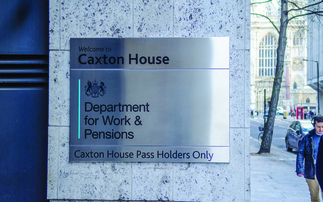
The petition has prompted a formal government response. In it, the government acknowledges the importance of improving efficiency in the pension transfer system while maintaining strong protections against scams, and confirms that the Department for Work and Pensions is considering operational improvements and further consultation. That recognition is welcome, but for savers, the real test will be how quickly it translates into tangible change.
Fixing pension transfers matters for several reasons.
First, consolidation is no longer optional, it's essential. Auto-enrolment has successfully brought millions into pension saving, but it has also led to widespread pot proliferation.
As people move jobs more frequently, they accumulate multiple small pension pots that are easily forgotten or left behind. With pensions dashboards on the horizon, millions will soon see just how fragmented their retirement savings really are and will be reunited with lost or forgotten pots. The logical next step will be consolidation as they seek to take control and better manage their savings – but that step will only work if transfers are efficient and reliable.
Second, pensions lag far behind the rest of the financial system. You can switch bank accounts in days, track investments in real time and move providers with a few clicks. Yet pensions, one of the most important financial assets most people will ever have, remain slow, opaque and inconsistent. Complexity is often cited as the reason, and while transfers can involve legacy systems and multiple third-parties, complexity cannot be a permanent excuse for inaction. The technology and processes already exist to see transfers work well, as indeed they do between many providers in industry. The delays do not need to exist.
Furthermore, slow and uncertain pension transfers undermine engagement, and that has direct consequences for retirement outcomes. Savers regularly report long waits and poor communication, leaving many unable to plan with confidence, particularly those approaching retirement.
When attempts to take action are met with delay or silence, trust in the system erodes. The result is not just inconvenience, but disengagement: transfers are abandoned, pots remain fragmented, fees stay higher than necessary, and opportunities to contribute or invest more effectively are missed.
What's needed now is a practical set of system-wide reforms to modernise how pension transfers work.
This includes mandating digital transfers across all schemes, particularly trust-based schemes regulated by The Pensions Regulator and those administered by third-party providers where delays are most common; improving transparency by requiring providers to publish transfer performance data; addressing instances where the amber and red flag framework is being misapplied as a cause of delay; and updating the outdated six-month statutory transfer deadline, which has remained unchanged for more than thirty years.
Introducing a clear, time-bound standard, for straightforward defined contribution (DC) transfers – a 10-day Pension Switch Guarantee – would bring consistency, accountability and a level of consumer protection that better reflects how modern financial services are expected to operate.
We welcome the government's acknowledgement that elements of the current anti-scams regulations may be contributing to delays, and its commitment to consult on improvements. Protecting savers from fraud is essential – but protection and efficiency are not mutually exclusive. In the same way as scams cause harm, a system that routinely allows delayed legitimate transfers also risks undermining trust and causing consumers harm.
There is also a broader point about consistency. The FCA is currently consulting on possible changes, but this applies to DC transfers between FCA-regulated schemes only. For real, system-wide change that brings consistency and uniformity to the consumer experience, reform must critically extend fairly across the entire market - including schemes regulated by TPR, where many of the longest delays persist, and where there can be heavy use of third-party administrators that fall outside of the direct regulation. Savers do not experience the pensions system in regulatory silos, and they should be met with a single system that works across all DC pension transfers - one of life's essential financial tasks. This will require close co-operation and a concerted effort from the FCA, TPR and DWP.
The introduction of a 10-day Pension Switch Guarantee would be a simple but transformative step. It would set clear expectations for consumers and providers alike, introduce accountability where delays occur, and help to ensure that when someone decides to move their pension, the system works as it should. It is achievable, proportionate and aligned with how people expect modern financial services to function.
There is clear public demand for a modernised pension transfer system, and the government has acknowledged the need to consider changes that build towards a more efficient transfer process. The next question is timing. When will these issues be addressed, and how quickly will savers see change?
This is a moment for momentum, not delay. Pension transfers should be fast, reliable and fair. People deserve no less, and after waiting long enough already, they'll be watching closely to see whether policymakers are ready to move at last.
Lisa Picardo is UK chief business officer at PensionBee
This article follows a consultation by the Financial Conduct Authority (FCA), Adapting our requirements for a changing pensions market (CP25/39), which closes today (12 February). The consultation outlined proposals for a new regime for interactive digital pension planning tools for in-force pensions and a new process to support non-advised consumers to make informed decisions about whether and where to transfer or consolidate their defined contribution (DC) pensions.
Read Professional Pensions' article on the industry response to the consultation here.