


From left: LCP head of investment strategy Gavin Orpin; Columbia Threadneedle Investments investment solutions director Richard Ferris; Capital Cranfield professional trustee John Nestor; Columbia Threadneedle Investments director of UK & Ireland institutional Zahra Sachak; IGG professional trustee Tim Giles; Capital Cranfield professional trustee Lisa Purdy; Aon partner Simon Rhodes; BESTrustees professional trustee Russell Baird; Vidett client director and head of sole trustee Duncan Willsher; Dalriada Trustees professional trustee Sam Taylor; Professional Pensions editor Jonathan Stapleton.
At the end of May, Professional Pensions assembled a panel of experts to look at the role of credit and liability-driven investment (LDI) in the defined benefit (DB) endgame.
The roundtable – chaired by PP editor Jonathan Stapleton and held in association with Columbia Threadneedle Investments – explored how credit allocations can complement LDI frameworks in today's environment, examining the characteristics trustees should prioritise under various strategic pathways.
It discussed how credit portfolios can be designed to support preparation for an insurance transaction, provide steady cashflow for run‑on approaches, or offer flexibility when objectives evolve.
Participants also compared differing implementation routes for pooled versus segregated clients – evaluating how each can enhance risk management, liquidity, resilience and cost efficiency.
Is run-on genuinely becoming a destination for well-funded schemes, or is it still primarily a route for schemes that cannot complete a buyout over the short term?
Simon Rhodes (Aon): Our latest UK DB pension schemes endgame survey received responses on behalf of 350 schemes. Of these, around 85% had identified a clear endgame destination and about a quarter of these were now looking at run-on beyond the point needed for settlement readiness.
It is, however, very dependent on scheme size. Among schemes with less than £500m in assets, the vast majority are still aiming for buyout. For schemes above £500m, it is much more evenly split, with roughly a 50:50 divide between those targeting buyout and those targeting run-on.
Even within run-on, we are seeing different approaches emerge. What is becoming more popular is the idea of actively running on to build a surplus, for example to potentially fund DC benefits or pay discretionary pension increases. We are definitely seeing active run-on become a conscious choice, particularly as a means of generating surplus. With new surplus flexibilities coming down the track, sponsors are actively encouraging these discussions.
Tim Giles (IGG): We are seeing a large number of schemes looking at run-on. In terms of the amount of assets, it is proportionately more than has been suggested. It may also be somewhat higher in terms of scheme numbers.
That said, for me, run-on is not ultimately a destination. Most people talking about run-on want to generate surplus over 10, 15 or even 20 years but, ultimately, there is an expectation that it will lead to insurance. It is changing the journey rather than changing the final destination. Insurance remains the endgame, but not necessarily as soon as a scheme becomes fully funded.
Duncan Willsher (Vidett): Yes, I definitely agree with the point that it is not really a destination. It is an unusual one because it depends on the relationship between the size of the scheme and the size of the sponsor.
Sometimes there are small sponsors with large schemes who think, this sort of arrangement could be lifechanging. Equally, there are large sponsors with small schemes who take the view that it is not worth their time and would rather get rid of it as soon as possible. Then there are plenty of situations in between.
If you have a large scheme backed by a small sponsor, it can be difficult as a trustee to sign off a long-term run-on strategy based on building a surplus over many years. It is not impossible, but it requires more thought and scrutiny than the reverse situation.
There have been a lot of schemes in a holding pattern and I am hopeful they will begin to move out of that as regulations become clearer. It will be interesting to see how things develop.
Russell Baird (BESTrustees): I can only concur with what has already been said. There is definitely segmentation by size. Larger schemes are generally the ones considering run-on, while smaller schemes are less likely to do so. However, it is important to differentiate based on employer covenant, because that can also be a key driver.
What is interesting at the moment is that the market seems to be in a pause. There are more options available, surplus regulations are becoming clearer, and schemes are trying to understand what that means for them.
We are also seeing increasingly competitive pricing, which gives trustees more options. From both a trustee and member perspective, greater choice and supply are positive because they drive pricing competitiveness.
I am also very mindful of cost. While buyout may be the eventual destination, schemes will still be paying a significant premium to insurers, much of which is due to deferred members. A well-governed scheme can manage its own surplus. Delaying a transaction can sometimes reduce the additional premium or profit ultimately passed to the insurer.
In the end, most schemes, regardless of size, are likely to reach a point where they question whether continuing to run on remains viable.
John Nestor (Capital Cranfield): All options should be on the table so that everyone fully understands the costs and risks involved.
For me, sponsor covenant is imperative. Also, I agree with Tim's point that, if you are going to share surplus above solvency levels, it should be clearly documented and legally robust. I have many conversations with employers about how surplus will be used, and sometimes they have already mentally spent it.
Overall, I think there are significant risks associated with running on. I do not think anyone around this table would say they foresaw Covid or periods when the gilt market lacked liquidity. That is what risk is. Can we really say anything is risk-free?
Gavin Orpin (LCP): I do see some schemes where run-on is definitely viewed as the long-term destination, particularly among some US-sponsored schemes which, from an accounting perspective, are comfortable continuing to run on.
It does seem to be sponsors that are driving much of this discussion. However, corporate priorities can change overnight, particularly for schemes that are already solvency funded and in surplus. For those schemes, it is already a choice.
I do wonder how long-term some employers will remain committed to running on for surplus generation before deciding they would rather crystallise that value and take the money out.
Lisa Purdy (Capital Cranfield): I was thinking about this when Tim was talking about corporates wanting to run on for 10 or 20 years. As Gavin said, that can change overnight.
It may be because a new finance director comes in or there is a change in leadership, and suddenly someone asks, "What are you doing with this?" or says, "I want that money in the business today."
The ability to pivot the portfolio therefore remains extremely important because you do not know what direction the sponsor may take.
Equally, there is the covenant, as we have discussed. Whether it is Covid or some other unforeseen event, risks can emerge. It is about making sure that, if circumstances change, you still have the ability to pivot towards an insurance-style portfolio.
Sam Taylor (Dalriada Trustees): I definitely agree with a lot of what has been said. The landscape has changed significantly.
Following the gilts crisis in 2022, gilt yields rose substantially and schemes became much better funded. That has encouraged sponsors to think more seriously about surplus extraction and the potential benefits.
I agree that the approach depends on the sponsor, its circumstances and size, as well as the size of the scheme.
However, we have a number of smaller clients that are starting to think about or plan for surplus extraction. For example, we have a £100m scheme sponsored by a relatively small business with annual revenue of around £8m. The scheme has built up a surplus of approximately £20m on a technical provisions basis and the sponsor is considering running on for an extended period. They are not necessarily planning to extract all of that surplus at once but are trying to take a more prudent approach, perhaps withdrawing £3m to £5m per year and investing it responsibly in the business.
One factor that has helped some smaller schemes consider run-on is increased competition around investment management fees, which helps to lessen the burden of ongoing expenses for smaller schemes. Asset managers are competing for a smaller pool of assets since the gilts crisis, which has increased competition and helped make the cost of running on more viable for some of those smaller schemes.

How can DB schemes design credit portfolios that remain effective across different endgame paths. More broadly, are you seeing greater interest from clients in running on for longer?
Zahra Sachak (Columbia Threadneedle Investments): It is mixed. For schemes looking to buyout, portfolio construction tends to focus on leveraged gilts and short-dated credit. For schemes looking to run-on, it is more about longer-dated credit generating stable income, perhaps with some exposure to illiquids.
Lisa, you are right – it is about pivoting the portfolio. For schemes that have more options, it is less about finding the right endgame and more about constructing a portfolio that can evolve as objectives change and the endgame becomes clearer.
Liquidity and flexibility are important. Even blending credit exposure is important, if the endgame is unknown – with highly liquid, high-quality credit helping to ensure buyout readiness if that happens, alongside a stable income component if run-on is on the horizon.
Across my client book, buyout has been the hot topic, particularly since the gilt crisis, with improved funding levels making it a more realistic option for many schemes. I also think that sponsor influence is a key driver – when sponsors want those liabilities off the balance sheet, they want them off the balance sheet.
Richard Ferris (Columbia Threadneedle Investments): Coming back to your original point about whether run-on is a destination or a holding pattern before buyout, that choice is reflected in investment strategy. The time horizon is key.
As Zahra said, clients looking to buyout in the near term will typically hold very liquid, short-dated credit, giving some pickup over cash to support the LDI portfolio and which can be sold very easily.
Clients that are still undecided are also likely to remain in liquid credit. They may hold longer-dated credit that produces some cashflows, but it is still something that can be readily sold and transferred.
Those that are committed to run-on and have a much longer time horizon are prepared to take more illiquid positions, locking money into illiquid credit strategies and taking a little more risk. You therefore see very different strategies across schemes, but again it comes back to the point about pivoting.
If you allocate to illiquid strategies, it becomes more difficult to realise those assets and there is potentially a cost to exiting some of those strategies if you subsequently decide to buyout.
When you are advising schemes on credit allocations, and allocations more broadly as they move towards an endgame, how do you think about the balance between matching assets and credit as a source of incremental return?
Gavin Orpin: Building on what Richard was saying, it very much depends on how committed the client is to run-on. I am coming from a position where virtually all my clients are solvency-funded, so they have a choice one way or the other.
If full buy-in is likely in the short term, we are going to be running a very low risk strategy. Indeed, if you look at matching insurer pricing, credit is almost off the table now. The range of what insurers are suggesting is from 0% credit up to about 20% credit – a very low level.
The more interesting area is the run-on side. After the gilts crisis, I wondered whether some schemes would materially reduce their hedge ratios. I would be interested in others' views on what has happened, but I have not seen that. I have seen schemes that are committed to run-on but are still retaining, or even moving towards, higher hedge ratios.
That means they need to ensure their collateral position is secure. Generally, even schemes that are running on may still be holding 50% or 60% of their assets in cash and gilts for collateral purposes, and in low-risk asset-backed securities (ABS) and short-duration credit. Within that allocation, that is the type of credit exposure they tend to have.
My experience is that the remaining 40% is more likely to be allocated to growth assets than credit. It is equities, infrastructure equity and perhaps some opportunistic credit, but not traditional credit. If it is credit, it tends to be more growth-oriented.
When considering how to incorporate credit, it is fairly vanilla at the moment. Credit spreads are quite low, so there is more focus on non-credit assets to drive growth.
Simon Rhodes: I would generally agree with that. I would mainly come at this from the perspective that you generally need clarity about the endgame – whether there is a desire to run-on or, more importantly, to retain the flexibility and optionality to buyout at the right time if the sponsor wishes.
For either endgame, I see the hedging strategy, using leveraged gilts, as the cornerstone. You want to protect that funding level, and with the recent increases in gilt yields, I have seen schemes using that as an opportunity to increase hedging.
As mentioned, many investors pursuing run-on strategies are now approaching portfolio construction through the lens of cashflow generation. Cashflow has become a key input into portfolio design: first, to manage risk; second, to generate returns; and third, to deliver the cashflows needed to meet pension payments and expenses.
We typically see run-on investors leaning more heavily into credit. There are challenges, however, because, currently, public market credit spreads are tight. We see better value in alternative credit and private credit, although investors are becoming increasingly discerning within private credit.
You need to be very selective about where you invest in credit markets, but run-on investors are generally allocating more heavily to credit and considering a range of private market options. I also agree with Gavin's point that insurers' appetite for credit within portfolios transferred at the point of transaction is currently quite limited. That may change.
We still believe some element of credit is important for clients targeting buyout, but insurers' appetite for it is currently quite low.
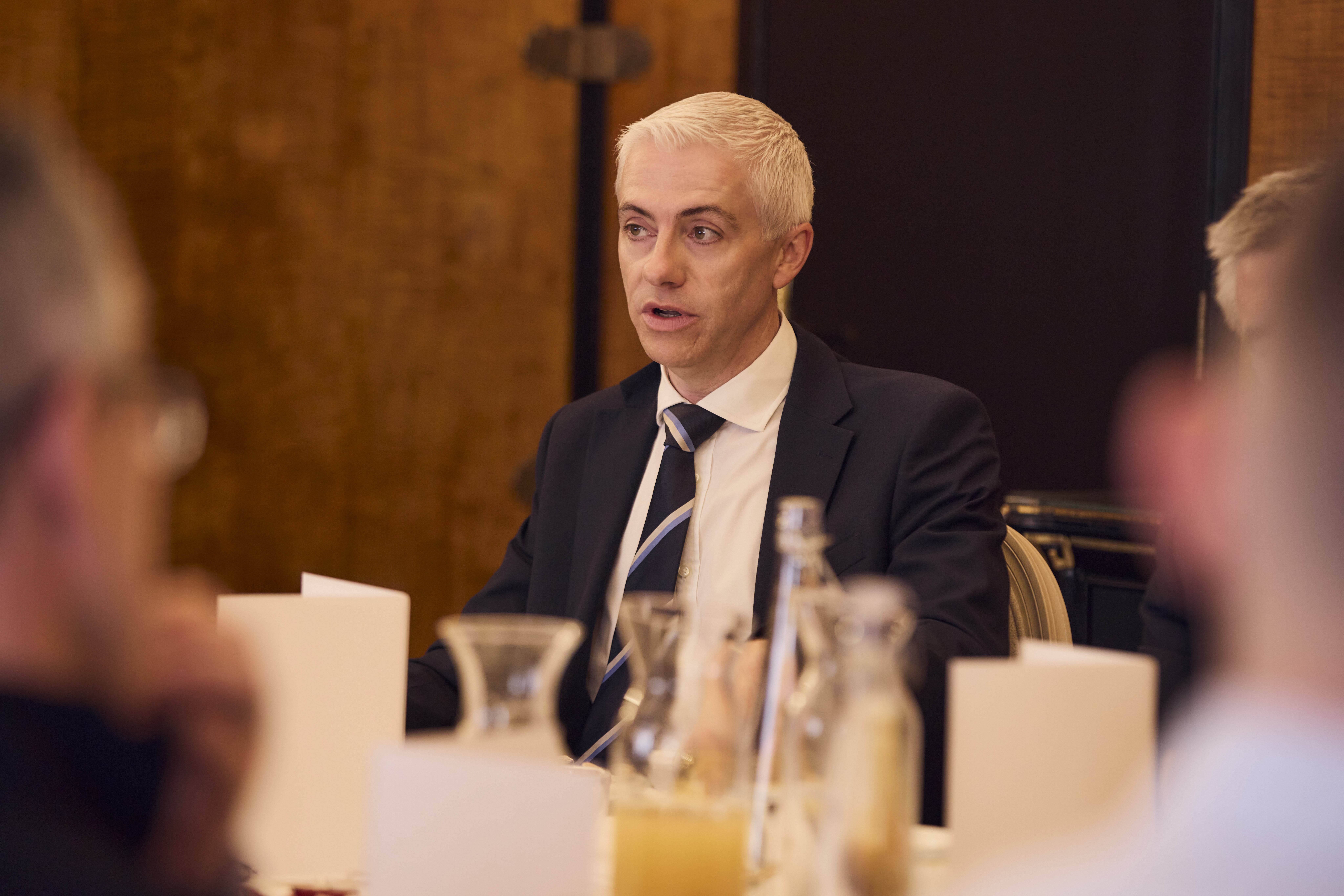
From a governance perspective, how comfortable are trustees with increasing credit allocations in endgame, particularly when it comes to less liquid parts of the market?
John Nestor (Capital Cranfield): Back in 2020, most schemes expected to be at least a decade away from solvency or buy-in. Things have changed significantly since then – leaving some schemes invested in assets and funds designed for a world in which schemes expected to have several years before executing a buy-in.
To answer your question, unless you are firmly committed to run-on, I do not think schemes should be allocating heavily to illiquid credit.
Duncan Willsher: I accept John's point, but there is growing availability of secondary markets and trading platforms that make buying and selling these assets easier and more transparent.
We had a scheme that was planning to run on. It had a very strong sponsor, plenty of cash and no desire to buy out because of the accounting implications. We were comfortable with that approach and were close to being fully funded.
We had just started discussing surplus and future strategy when the company was acquired and the covenant changed overnight. The conversation immediately became: "Can we buy this out now?"
The scheme held some illiquid credit, but we were able to sell those assets at a price that facilitated the transaction.
I am a strong advocate of retaining flexibility because circumstances change. That does not mean avoiding illiquidity altogether. It is about taking the right type of illiquidity and understanding the associated risks.
Trustees may decide that a six-month delay could mean missing an opportunity, but that it is a risk worth taking. There is a place for illiquid assets, provided those trade-offs have been properly considered. Hopefully, the continued development of secondary markets will make those transactions easier over time.
John Nestor: To build on that point about flexibility, one of the first areas bulk annuity advisers focus on when reviewing a portfolio is the illiquid allocation.
I have been involved in several discussions where advisers wanted to engage directly with the employer to understand where liquidity would come from if it was needed. We have generally been sufficiently well funded that we have not had to access those assets and, in some cases, redemptions have come through relatively quickly. Nevertheless, that is often where attention is focused.
It can create tension if you do not have a clear answer for the insurer about how serious you are about completing a transaction.
The key is being able to explain why you hold those assets and whether you genuinely need them. In one case, if liquidity had been required at short notice, the sponsor would have provided a short-term loan to the pension scheme to bridge the gap.
There are solutions available if you find yourself holding illiquid assets. I am not against them. With the right time horizon, they can be entirely appropriate.
Russell Baird: To summarise Duncan's and John's points, the investment strategy and underlying assets should add value today without creating friction for the endgame objective.
If you know buyout is the likely destination – and, as Lisa said earlier, that can change quite quickly – then you need to understand the challenges that illiquid assets can create. By definition, they are less liquid, so you need to consider what alternatives are available.
We are currently going through a transaction process and one lesson I have learned, particularly with smaller schemes, is not to over-engineer the strategy.
We had a very insurer-friendly investment strategy, with interest rate and inflation hedging, credit exposure and other characteristics designed to support buyout. However, between the start of the month and the receipt of updated insurer quotations, pricing moved materially. Since then, markets have been volatile again and our exposure has changed further.
In certain situations, what you need is a robust and pragmatic investment strategy. You need to understand the implications of illiquidity and retain the ability to move quickly.
We are currently in a position where assets may need to be sold quickly to secure a price lock with a chosen insurer. That reinforces why liquidity matters.
There are many moving parts. Markets can move rapidly, as we have seen over recent weeks. Each insurer has a different investment strategy and a different approach to price locking, so transaction pricing can move in different ways.
There is no silver bullet that allows a pension scheme to match every insurer perfectly.

How do you see trustees evaluating the trade-offs between credit and other types of growth or matching assets?
Sam Taylor: It is interesting. With so many schemes now very well funded and de-risked, the portfolios of schemes looking to run on over a 10 to 15-year horizon and schemes looking to hedge buyout pricing often look quite similar. Many are targeting a return around gilts plus 1% per annum.
A few years ago, before credit spreads fell as significantly as they have, achieving gilts plus 1% was much easier. You could invest 50% of the portfolio in gilts, with the remainder in corporate bonds, and if those corporate bonds were yielding gilts plus 1.5% or more, you could get close to that target return quite easily.
That is no longer the case. Schemes now face a choice between introducing higher-returning credit assets to make up the required return or, as Gavin mentioned, introducing more traditional growth assets into what would still typically be considered a low-risk portfolio.
For one of our larger schemes, we implemented a cashflow-driven investment (CDI) strategy. The scheme is targeting around gilts plus 1% per annum and its long-term objective is to run on for an extended period. One of the metrics monitored by the fiduciary manager is how much return would be required from the remaining assets if markets moved against the scheme and the funding level fell by a given amount, in order to restore that funding position and remain on track.
Interestingly, the manager came to us last quarter and said that, given how low credit spreads are, the credit assets currently in the portfolio would not be able to generate the required return. As a result, we are looking to introduce additional tools, including enhanced ABS and higher-yielding credit, to try and boost that return potential.
By contrast, we have another, smaller scheme targeting buyout within the next few years but with a similar target return per annum. The manager raised the same issue, noting that a legacy illiquid asset portfolio is running off and that the credit assets currently available are unlikely to achieve a gilts plus 1% per annum return in the current environment.
In that case, the solution is different. The scheme is very well funded and close to, if not already at, full funding on a buyout basis, so it can afford to reduce its return target slightly. That highlights the interesting decisions many well-funded schemes now face.
Lisa Purdy: I agree. In this well-funded, post-LDI-crisis environment of higher yields and tighter credit spreads, we are seeing a move towards alternative credit as a source of growth. Traditional long-dated investment-grade credit spreads are simply too low to generate the returns schemes are seeking.
I have portfolios moving further along the high-yield spectrum, as well as into bank loans and other forms of credit. Emerging market debt is also being used. Credit is still being used as a growth asset, but in a different way.
I expect that trend to continue while credit spreads remain low.
One concern I have is that we may gradually end up with portfolios that are heavily concentrated in credit. We all lived through the global financial crisis and saw what happened then. Credit markets became illiquid and spreads widened dramatically. That remains one of the key risks I worry about today.
Tim Giles: I think there are two key themes.
The first is optionality and agility around illiquid assets. If a scheme is well funded and has surplus assets, it may be appropriate to hold some illiquid assets because there is less likelihood of needing to realise them quickly. However, trustees still need to consider pricing, liquidity and the options available to them.
The second theme is diversification. I largely agree with Lisa's comments. We see fewer CDI strategies being implemented today, for the reasons Gavin outlined. The excess return over risk-free assets is often not sufficient to justify them.
As a result, schemes are increasingly diversifying. They are using alternative credit, although even alternative credit does not always offer compelling pricing. More broadly, they are spreading risk across different asset classes.
There is also a move towards growth assets, including various forms of equity and hedge funds. The result is a run-on strategy that is less focused on matching cashflows and more focused on generating yield from a diversified portfolio of credit, growth assets and appropriately sized illiquid investments.
Gavin Orpin: One thing I am seeing with run-on portfolios is clients recognising that there are risks they cannot hedge. Those might include regulatory changes. Longevity risk can potentially be hedged, but that is not always straightforward.
As a result, they often turn to growth assets rather than credit assets as a way of managing those uncertainties.
Tim Giles: That is what insurers have always done.
Gavin Orpin: Exactly. There is definitely a role for growth assets for managing risks. They are not there to match liabilities, but rather to build a buffer against risks that cannot easily be hedged.

Let us talk about insurance-owned asset preferences. How real is the dynamic of schemes holding assets that may be particularly attractive in a bulk annuity transaction? To what extent is that influencing credit portfolio construction?
Simon Rhodes: Yes, it does have an influence. A lot depends on how close a scheme is to carrying out a transaction.
In buyout transactions we've seen, insurers take a very keen interest in what schemes are holding and what they may be holding at the point of transaction. There is a genuine focus on the asset mix – and schemes generally want to be holding very liquid, high-quality assets at the point of transaction.
That said, we have been involved with a couple of schemes completing buyout transactions while still holding private market illiquid assets. They are no longer the complete impediment to a transaction that they once were. Those schemes may be the exception rather than the rule, but it is still occasionally possible to complete a transaction while holding illiquid assets.
If your timeframe is still two or three years away from a transaction, we would not advise trustees to rush into investment-grade credit today. We would advocate a more measured approach and encourage schemes not to lose sight of their current objectives around downside protection, resilience, return and cashflow generation.
As we know, insurers currently tend to prefer receiving cash and gilts. That may change as and when spreads widen, but, for now, we would not recommend rushing headlong into investment-grade credit.
Russell Baird: Can I pose a question? Having worked for an insurer in the past, insurers are all looking for additional return and are investing in illiquids, alternatives and Solvency II-friendly assets. Pension schemes hold many of those assets as well. What disappoints me is the lack of synergy between the two.
Schemes often become forced sellers and then purchase alternative assets, meaning someone in the middle benefits while trustees incur unnecessary transaction costs. From a trustee perspective, that represents a loss of value.
It would be interesting to understand whether there is greater opportunity for in-specie transfers. You hear of the occasional example, but, as Simon said, it remains more the exception than the rule.
John Nestor: I agree. Gavin, Simon, have you seen organisations coming forward with an "invest like an insurer" strategy?
Gavin Orpin: Not really. I recently went through a process involving six insurers. The scheme had an investment-grade credit portfolio and only one insurer showed any real interest in it. The other five effectively said, "Sell it. We just want cash and gilts".
The scheme also held some relatively attractive long-term infrastructure debt. We found it more efficient to separate that out and sell on the secondary market. Another insurer, which had not been particularly competitive on the buy-in pricing, was very interested in that debt.
That is one way to access value from illiquid assets. If you have attractive illiquids, you may be able to find an insurer that values them, but you probably need to do that before the transaction itself. You do not want to constrain your options unnecessarily.
For that infrastructure debt asset, we achieved pricing that was significantly better than expected because one insurer happened to have demand for that particular asset. If you are close to buy-in, given current market conditions, the priority is generally reducing risk rather than increasing credit exposure.
Lisa Purdy: Were they holding it directly or through a fund? Generally, insurers do not tend to like funds, do they?
Gavin Orpin: It was a fund. That was what made it interesting. That particular insurer was willing to take it.
It was a secondary market process and, in the end, the buyer happened to be an insurer. Normally, the buyer would be another pension scheme or a secondary market fund manager.
Richard Ferris: I would echo those comments. As an LDI manager, we are often heavily involved in the final transition to an insurer. In our experience, it is very much the exception for an insurer to accept anything other than cash or gilts, whether that is illiquid assets or even standard investment-grade credit.
Typically, assets are sold down at the point of price lock. The price lock is usually based on a gilt portfolio, so we trade towards that position, match the price lock and then unwind the leverage before the transaction completes.
It remains very much the exception for non-standard assets to form part of that transition.

What does LDI implementation done well look like in today's environment? How should schemes balance hedging, collateral efficiency and governance when working within both pooled and segregated environments?
Richard Ferris: The challenge is broadly the same whether a scheme is targeting run-on or buyout. The key is achieving an accurate hedge without taking undue risk.
Curve matching is particularly important. We have recently seen significant steepening and flattening of the yield curve, with different parts of the curve moving independently. Making sure the hedge reflects the structure of the liabilities is essential, as is ensuring the LDI manager is actively managing that exposure and that the benchmark accurately reflects the liabilities.
It is also important to have a robust process for accessing additional collateral. We all remember what happened in 2022. While recent increases in yields have been much more orderly, LDI funds are still calling for collateral. In general, schemes now have much stronger governance arrangements than they did three years ago and collateral is often held with, or readily accessible to, the LDI manager, allowing that process to be managed efficiently without trustees having to move assets between managers during periods of market stress.
The role of the LDI portfolio also depends on the endgame. If a scheme is targeting buyout in the near term, the focus is on stabilising the funding position and locking in current funding gains. Assets also need to be sufficiently liquid to transfer to insurers.
For schemes running on, there is a broader question about what is required from the LDI portfolio beyond hedging. Is there scope to generate additional returns? Could a more active approach add value through instrument selection or active management?
You can also use the LDI portfolio to gain synthetic growth exposure. Synthetic credit can provide additional spread, and synthetic equity exposure is another option. There are a number of ways an LDI strategy can be used, whichever direction a scheme is heading.
Zahra Sachak: I would echo Richard's comments – LDI done well today is about delivering effective hedging in a way that's resilient, liquid and operationally manageable.
Schemes need to be cognisant of collateral demands, ensuring sufficient liquidity buffers to withstand market stress, while avoiding unnecessary drag from excess collateral.
The right approach depends on governance capacity – pooled solutions offer simplicity and lower governance burden, whereas segregated mandates provide greater flexibility over hedging and collateral at the cost of increased complexity.
Ultimately, good implementation aligns the structure to the scheme's resources and endgame, stabilising funding without introducing avoidable liquidity or governance risk.

From an advisory perspective, has the LDI conversation with trustees changed? Is attention starting to shift now that funding positions have improved
Simon Rhodes: Yes, it has definitely changed. The conversation is no longer simply about the hedge ratio and whether it should be increased. Those discussions still take place, but there is now much greater focus on the resilience of the hedging portfolio.
It is all very well having a high hedge ratio, but can it be sustained in a crisis? Now, and following the events in 2022, there is much greater emphasis on ensuring LDI portfolios are robust, supported by sufficient collateral, backed by strong liquidity and governed appropriately so that hedging can be maintained during periods of market stress.
To link this back to the run-on discussion, around a year ago one of our run-on clients reviewed its LDI strategy. It is an open scheme, still accruing benefits, with a strong employer covenant and a relatively high return target. The scheme viewed higher yields as an opportunity to increase hedging incrementally.
However, increasing hedging would also have required additional collateral, reducing the return-generating assets available. The trustees concluded that the marginal benefit of additional hedging was relatively small given the scheme's balance of risks and long-term horizon. In regulatory terms, its point of significant maturity is still around 40 years away.
Their conclusion was that return generation remained the priority and that they did not want to tie up excessive collateral in pursuit of a higher hedge ratio.
Gavin Orpin: On that point, I have seen clients use equity futures and credit CDS to maintain growth exposure while addressing collateral requirements. Some are becoming increasingly comfortable with that approach, although it depends on the individual client.
More broadly, the biggest change I have seen is that clients want to be able to sleep at night. The gilts crisis came as a shock and trustees do not want to experience that again.
As a result, all of my clients that previously used pooled LDI have moved to segregated or bespoke arrangements. They no longer want unexpected collateral calls arriving with very little notice.
There is also a much greater focus on governance arrangements around collateral management. I am seeing more assets placed under the direct control of the LDI manager, either through powers of attorney or delegated arrangements, so trustees do not need to be involved in every collateral movement.
That has probably been the biggest change. It allows trustees to focus their attention on growth assets and return generation, where they are generally more comfortable spending their time.
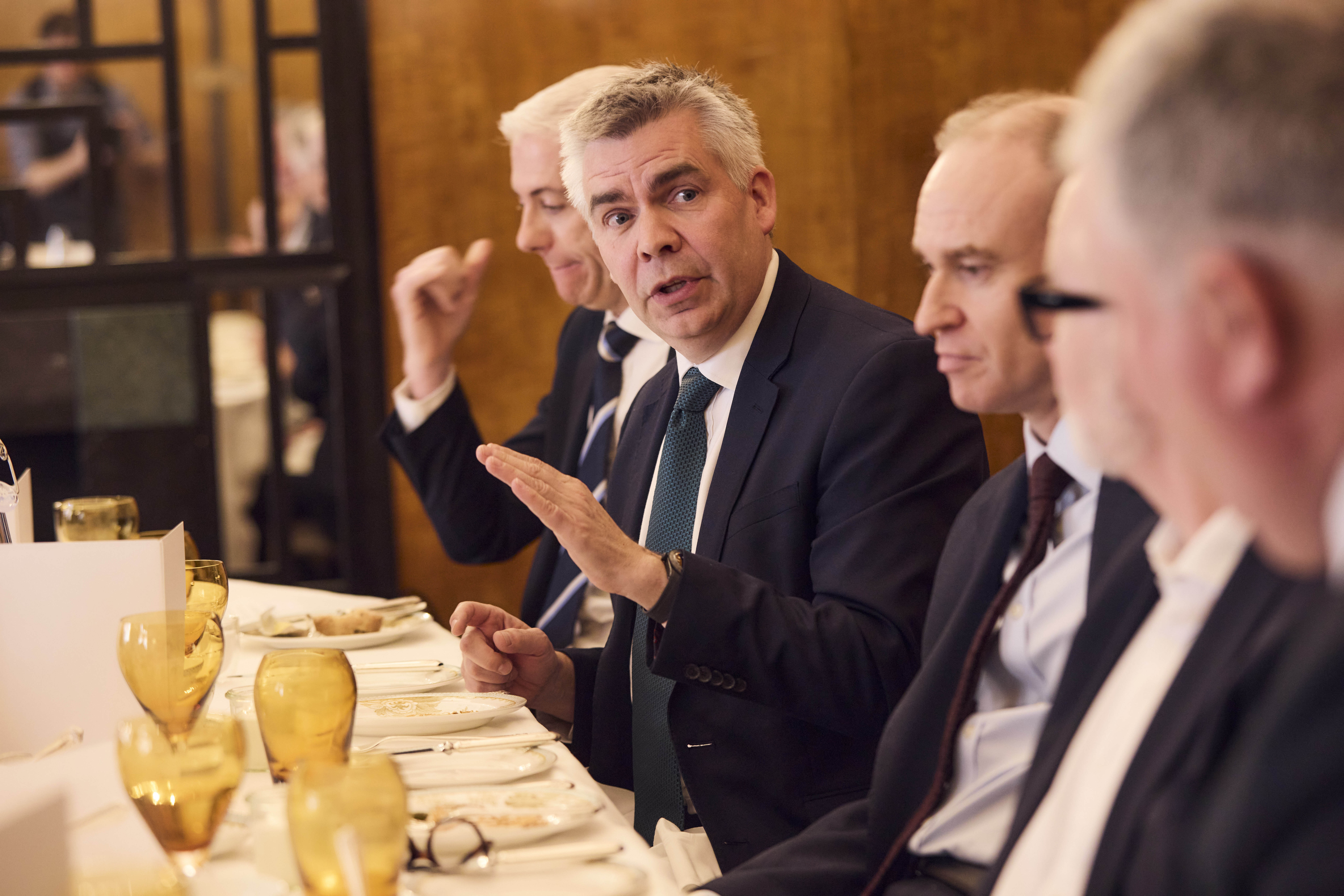
Tim, as a professional trustee, when you are reviewing LDI mandates, has your perspective changed?
Tim Giles: Gavin's point about sleeping at night is right at the top of the list, alongside Simon's comments on resilience and liquidity.
The priority is making sure portfolios are robust enough to withstand sharp movements in yields. Nobody wants to be caught out by another event like 2022.
There are also opportunities to enhance liquidity and returns through the use of equity and CDS-based mandates. We are seeing renewed interest in approaches such as buy-and-enhance LDI strategies to generate additional basis points of return.
One point I would come back to is hedging accuracy. Historically, there was a clearer hierarchy between technical provisions, low dependency and solvency measures. That distinction has become less obvious.
As a result, some schemes may now find themselves over-hedged relative to solvency measures. I am not convinced that achieving a perfect curve match is always the most important objective. The priority should be ensuring that you are hedging the right thing.
If hedge levels are 10% or 15% above a scheme's solvency position, is that really where you want to be, even if the scheme is running on?
Richard Ferris: That raises an important question: what is the target hedge ratio?
Particularly for schemes running on, trustees are increasingly asking whether they should be protecting a specific level of surplus. That remains an active area of discussion.
Gavin Orpin: If you are targeting solvency, what exactly is the hedge ratio you are aiming for? On a recent project, I saw a 20% difference between insurers' views. They were nowhere near each other.
Tim Giles: Exactly. That is the point.
Gavin Orpin: People are much more pragmatic than they used to be. We recognise that this is an art rather than a science. You cannot do it perfectly and circumstances change.

Lisa, are you thinking differently about LDI mandates among your schemes?
Lisa Purdy: A couple of things changed after the crisis.
One was the move towards segregated arrangements. Managers recognised the demand and improved their systems and processes, making segregated solutions much more accessible for smaller schemes. Historically, we might have used £500m as a rough threshold for segregated LDI. Today, schemes with around £100m of liabilities can access those solutions.
There are also now more meaningful differences between bespoke pooled and segregated arrangements than there were before the crisis. Historically, the distinctions were mainly around custody and structure. The regulatory framework has since evolved.
To Simon's point about making the LDI portfolio work harder, segregated arrangements can offer advantages because they generally require less collateral to be held in reserve. That changes the economics and makes the decision more nuanced.
That is not to say pooled solutions are no longer appropriate. They remain an excellent option for many smaller schemes, provided collateral arrangements are properly structured. However, the range of viable options available to smaller schemes has expanded significantly.
Duncan Willsher: I agree. I am a strong advocate of segregated arrangements.
If schemes in the £100m to £500m range have not revisited their pooled LDI arrangements recently, they should do so. Referring back to the example I mentioned earlier, moving to a segregated structure gave us additional flexibility as we approached buy-in.
If trustees want to make use of tools such as synthetic exposures, segregated mandates are often much better suited to supporting those types of short-term tactical decisions.
Sam Taylor: Things have definitely changed. There is much more to think about with LDI mandates than there was say five years ago.
Before the gilts crisis, trustees often viewed LDI portfolios in isolation. As long as the LDI strategy was doing its job, the rest of the portfolio could almost be considered separately.
Today, with greater collateral requirements and stronger funding positions, LDI portfolios typically account for a much larger proportion of overall scheme assets. That means they need to be considered as part of the wider portfolio.
One of the most important issues is collateral efficiency. For segregated mandates in particular, the question is how effectively collateral can be utilised. That includes tools such as equity derivatives and credit-default swaps (CDS).
We have one scheme using CDS within its LDI portfolio. If spreads rise to an attractive level, the intention is to add investment-grade credit exposure efficiently through CDS before ultimately transitioning into physical credit and locking in those spreads.
For pooled arrangements, the focus is often on constructing a sensible collateral waterfall, ensuring access to liquid assets that can be sold relatively cheaply and are not necessarily correlated with rising gilt yields.
There is simply more for trustees to think about than there used to be.

John, does it all come down to being able to sleep well at night?
John Nestor: To an extent, yes. But I would ask a more fundamental question: 20 years on, does LDI still deserve a place on the team sheet?
In a world where many schemes are fully funded on a solvency basis, why do we need leverage? I chaired a scheme that did not hedge until 2023 and, when we eventually did, it worked out very well. LDI had an important role when many schemes were in deficit and needed growth assets to repair funding gaps. We are now in a different place.
I attended a banking industry dinner in November 2022 and many of the risk professionals there were asking why pension schemes were using leverage when they were already solvent. That is the bigger question for me. Why is leverage still required?
Richard Ferris: That is a fair question. LDI encompasses a number of different things. Fundamentally, it is about understanding liability sensitivities and holding assets that match them. Leverage can be part of that approach, but it does not have to be.
An LDI strategy can be entirely unleveraged. If a scheme does not need leverage to support growth objectives, then it may not need leverage at all. The right answer depends on the circumstances of the individual scheme, its funding position and its long-term objectives.
John Nestor: My point is that when schemes were targeting gilts plus 3% or 4%, leverage made sense. We are no longer operating in that environment. Back in 2007, we acquired a pension fund and fully immunised it without leverage.
Richard Ferris: If you can afford to do that, then why would you not?
Lisa Purdy: I assume average leverage ratios have fallen significantly?
Richard Ferris: They have. On average, pooled fund leverage levels have fallen from around three times to two times. Most segregated mandates also have much higher resilience because they hold larger collateral pools.
John Nestor: My point is simply this: given all the complexity involved in collateral management, is the leverage really worth the hassle?
Tim Giles: Leverage exists because schemes continue to need return. The question is the same as it always was: what return are you trying to generate?
John Nestor: Exactly. What return are you targeting and, across the portfolio as a whole, does everything fit together?
Russell Baird: From my perspective as a trustee, a good LDI strategy is one that produces no surprises. That is where things failed during the gilts crisis.
Whether the issue is collateral, liquidity or manager oversight, robustness is what matters. LDI is not an exact science.
Two things stand out for me. The first is integration. You want advisers who can look across the whole portfolio and understand how the different moving parts interact.
The second is governance and due diligence. We were told that ABS could be an excellent source of collateral because it was liquid and generated additional yield. However, when you looked through the holdings, many managers owned the same assets on behalf of UK DB schemes. If everyone wanted to sell at the same time, liquidity would quickly disappear.
Trustees therefore need to understand not only what assets they hold, but how those assets would behave under stress.
Tim Giles: That was one of the key lessons from 2022. Resilience mattered, but so did governance. The episode placed enormous strain on asset managers, consultants and fiduciary managers.
Russell Baird: Exactly. It is about oversight. ABS may be liquid in normal markets, but if everyone wants to sell simultaneously, that liquidity disappears.

One issue that has been raised is the balance between pooled and segregated LDI. Are clients still debating which route to take?
Zahra Sachak: Mandate size remains a major factor. Smaller schemes generally favour pooled arrangements, while larger schemes tend to choose segregated structures.
I agree with many of the points that have been made, but there is one misconception we spend a lot of time addressing. Some clients assume that segregated or bespoke fund-of-one structures automatically deliver better hedge matching.
That is not necessarily true. Pooled funds can also provide very effective hedge matching. Many managers now have extensive pooled LDI toolkits that can accommodate a wide range of liability profiles, whether schemes require short-dated exposures or a broader range of hedging solutions.
Cost efficiency remains an important advantage of pooled arrangements, particularly for smaller schemes.
Can I ask you for your concluding thoughts and key takeaways, please?
Simon Rhodes: Endgame clarity is ideal, but it is important to retain optionality regardless of the destination by building and maintaining resilient portfolios. That would be my key message: well-designed resilient portfolios supported by LDI and credit and deliverable in practice.
John Nestor: Surplus is a very emotive subject. Trustees receive a lot of pressure, particularly around structures with pre-97 increases, and we need to consider the full range of benefits within DB schemes and how surpluses are used.
Ultimately, we are there to represent all members and treat members fairly. Surplus distribution can be a very difficult tightrope to walk, and it is something we are constantly mindful of.
Lisa Purdy: In terms of run-on portfolios, be aware of the potential need to pivot in the future, whether because of covenant changes or changes in management. Make sure the portfolio is sufficiently flexible and resilient to accommodate that.
Sam Taylor: It has been a really useful conversation. I think the themes we have covered reflect the discussions we're having with clients every day – running on, surplus sharing, how LDI fits into investment strategies, and how to build an investment strategy when credit spreads are very low.
Duncan Willsher: Resilience is important and adaptability is important. However, adaptability does not mean taking zero risk. It is about taking measured and considered risks around issues such as illiquidity and deciding where you want to sit on that spectrum.
We often talk as though we know what the future holds, but we are only one economic shock away from having a completely different conversation. For me, adaptability is the key theme.
Russell Baird: To Duncan's point, look at the number of years of DB pensions experience we have around this table, yet the market still surprises us all the time. There are always new developments and changing circumstances.
That reinforces the importance of good investment advice, good investment management and good trusteeship in protecting members' interests.
Tim Giles: I will pick up on Duncan's themes because I agree with them. I do not think there is such a thing as a zero-risk scheme.
You need to focus on the bigger picture and make sure the strategy is appropriate for current markets and conditions, able to respond to change, resilient, and supported by the right governance structure to deal with whatever may arise.
Gavin Orpin: My concluding comments are to use your LDI manager to their fullest capability. Give them appropriate discretion, boundaries and flexibility. They are the people who can manage money on a day-to-day basis.
If trustees provide that framework, they can sleep more easily at night and worry less about the prospect of another gilts crisis.
Zahra Sachak: There have been some excellent points made around the table today. Thank you, everyone, for taking part.
From my perspective, collateral efficiency and diversification are extremely important, particularly in the wake of the gilts crisis.
Think carefully about how the collateral pool is allocated. Russell's point about ABS was a very good one. Over the past few years, a number of clients have allocated to Euro ABS, but it may also be worth thinking more broadly and taking a global approach.
Richard Ferris: I would echo Gavin's point. Your LDI manager can provide a great deal of support. There is a lot we can do, not only to hedge liabilities but also to facilitate other parts of the portfolio through implementation, segregated mandates or a fund-of-one structure.
More broadly, it is encouraging that we are having these discussions at all. Schemes are generally in strong funding positions and now have a range of options available to them. That is positive for both trustees and sponsors, although it does create more strategic decisions to consider.
Strategy remains critical, but governance, flexibility and the ability to adapt are equally important.
This roundtable was held on 21 May 2026 in association with Columbia Threadneedle Investments
Share
Related Topics
-
Investment

-
Liability Driven Investment
-
Fixed Income
-
Columbia Threadneedle Investments
-
CTI
-
Liability Driven Investment
-
Credit
-
LCP
-
Gavin Orpin
-
Richard Ferris
-
Capital Cranfield
-
John Nestor
-
Zahra Sachak
-
IGG
-
Independent Governance Group
-
Tim Giles
-
Lisa Purdy
-
Aon
-
Simon Rhodes
-
BESTrustees
-
Russell Baird
-
Vidett
-
duncan willsher
-
Dalriada Trustees
-
Sam Taylor


